
05
Price Optimisation: Smart,
Fair, and Adviser-Friendly



Next Article
Previous Article
Fair Value
Competing with Aggregators

Pricing in the insurance industry has traditionally been a balancing act between risk, profitability, and competitiveness. But in a digital-first environment - where advisers need to convert clients quickly and fairly - the old one-size-fits-all approach is no longer enough.
That’s why Uinsure has developed a sophisticated pricing optimisation model that helps advisers offer more personalised, effective quotes - without compromising compliance, margin, or client trust.
What Is Price Optimisation in Insurance?
At its core, price optimisation is about using data to:

The result? Smarter pricing that improves both conversion and customer satisfaction.
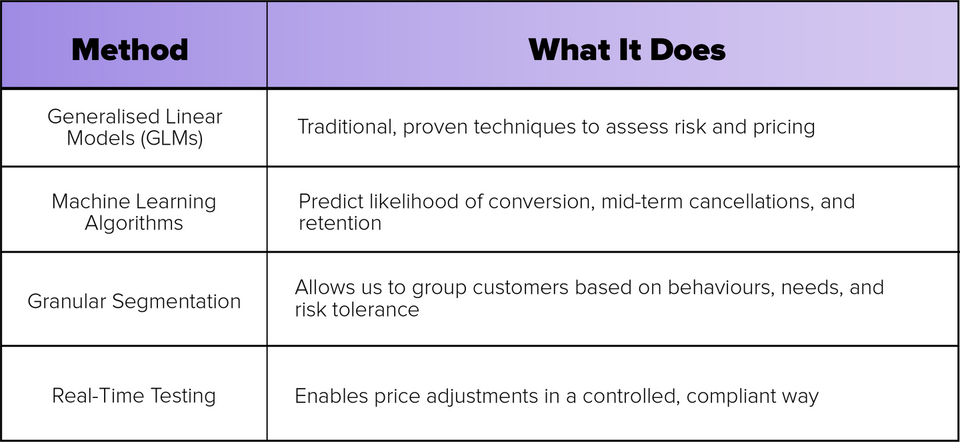
Why This Matters to Intermediaries
Many mortgage advisers don’t want to be pricing experts - and they shouldn’t have to be. But having the right pricing in the background gives them confidence to:
Recommend quotes that are competitive and credible
Handle objections more effectively (“Why is this more expensive than online?”)
Conversion optimisation, especially for price-sensitive or comparison-prone clients
With nearly half of price-driven non-buyers saying they’d convert with a £50/year reduction, even modest adjustments can have big impacts.
Fair, Not Discounted
Smart pricing isn’t about racing to the bottom - it’s about precision.
By using advanced models, advisers can offer:

And perhaps most importantly: advice that clients feel confident accepting, because the price feels right - and fair.
A Win-Win Outcome
When done right, pricing sophistication delivers:
Higher conversion for advisers
Greater transparency and satisfaction for clients
Long-term trust and retention for everyone
Price will always matter. But with Uinsure’s optimiser, you can win on value, timing, and fairness - not just the number at the bottom of the quote.
Next Article
Previous Article
Fair Value
Competing with Aggregators